
The Rise of Electric Vehicles: What New Drivers Need to Know About EVs in 2025–2026

Posted by Tom Dennis on Nov 25th 2025

The Rise of Electric Vehicles: What New Drivers Need to Know About EVs in 2025–2026
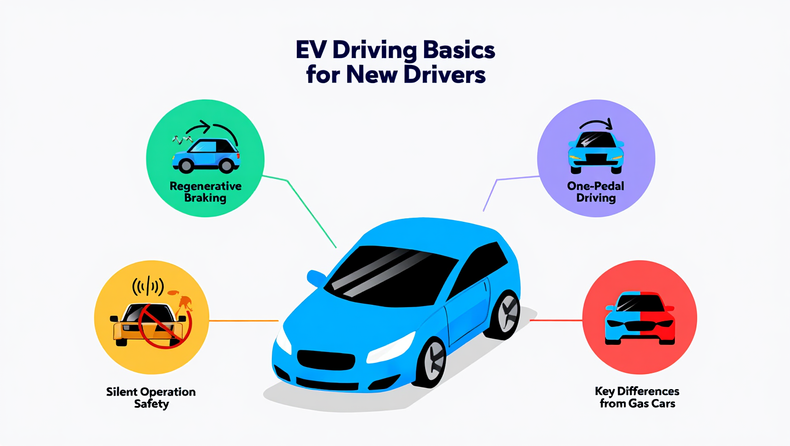
Electric vehicles (EVs) are no longer the future — they’re the present. In 2025, over 25% of new car sales in many regions are fully electric, and the trend is accelerating. If you or your teen are learning to drive right now, there’s a very good chance your first car will be electric or at least a plug-in hybrid.At Rhodes Driving Schools, we’ve already updated our entire curriculum and training fleet to include the latest EVs. Here’s everything new drivers (and their parents) need to know before getting behind the wheel of an electric car.1. Instant Torque Changes EverythingUnlike gas cars that build power gradually, EVs deliver 100% of their torque the moment you touch the accelerator. This makes them incredibly quick — but also easy to spin tires or lurch forward if you’re too aggressive.Key beginner tip: Use only 10–20% of pedal travel in the first few seconds. Think “feather,” not “floor it.”2. One-Pedal Driving: Your New Best FriendMost EVs let you drive using just the accelerator pedal:
  • Lift off → the car slows down dramatically using regenerative braking
  • Come to a complete stop without ever touching the brake (in many models)
It feels strange at first but becomes second nature in about 20 minutes. Our instructors teach you exactly how to smooth it out so you never jerk passengers around.3. Regenerative Braking vs Traditional BrakesRegen does 70–90% of your slowing down in city driving, which means:
  • Brake pads last 100,000+ km
  • You rarely need the actual brake pedal except for emergencies
However, when roads are wet, snowy, or icy, regen can overwhelm tires. We teach you how to toggle regen strength or temporarily switch to “coast” mode for maximum control.4. Range Reality: Plan Like You Plan Fuel — But SmarterCold weather can reduce EV range by 20–40%. New drivers often panic when the percentage drops faster than expected.What we teach:
  • Pre-condition the cabin and battery while still plugged in (uses wall power, not your range)
  • Use seat and steering-wheel heaters instead of cabin heat
  • Drive in Eco mode until you’re comfortable
5. Charging Etiquette Every New Driver Must Know
  • Don’t “ICE” someone (parking a gas car in a charging spot)
  • Move your car as soon as charging finishes — people are waiting
  • Know the difference between Level 2 (mall) and DC Fast Charging (highway)
Pro move: Download apps like PlugShare and ChargePoint before your first solo trip.6. Silence Is Golden — But Dangerous for PedestriansEVs are almost silent below 30 km/h. Many now play an artificial sound, but it’s still quiet.Defensive driving rule: Assume pedestrians and cyclists can’t hear you. Make eye contact and be ready to stop.7. Lower Center of Gravity = Better Handling (Most of the Time)Heavy battery packs sit low in the floor, making EVs handle like sports cars — until you hit snow or ice. Then the extra weight can make stopping distances longer.That’s why Rhodes now offers an EV-Specific Winter Driving module — the only school in the region doing it.8. Insurance & Licensing Notes for 2025Good news: Most provinces and states treat EVs exactly like gas cars for licensing purposes — no special endorsement needed. Insurance rates for new drivers in EVs are often 5–15% lower because of built-in safety tech (automatic emergency braking, 360° cameras, etc.).Don’t learn on yesterday’s technology. Start your driving journey in the car you’ll actually own.