
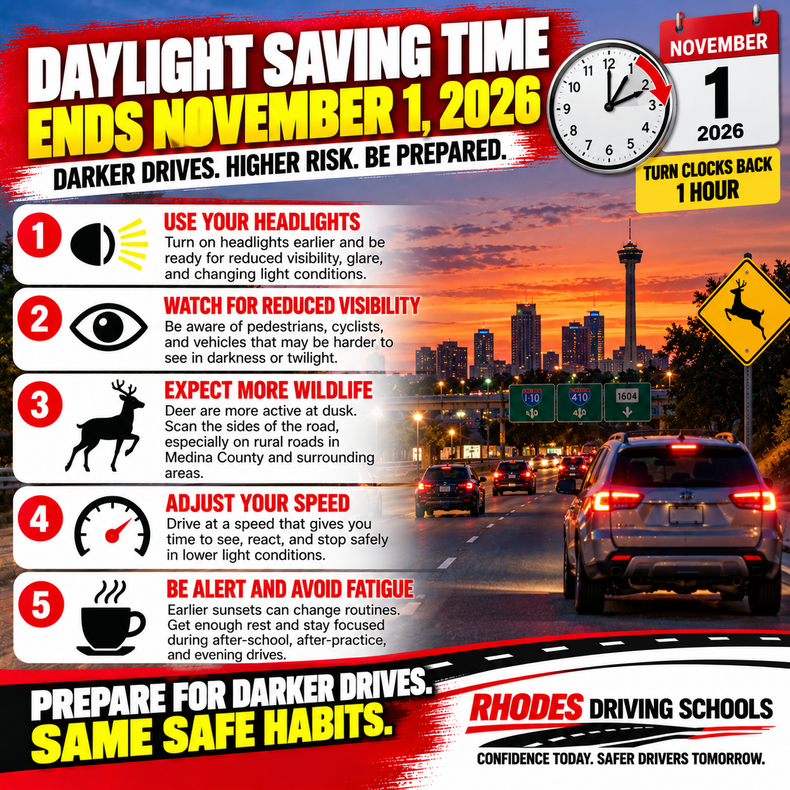
Daylight saving time ends on November 1, 2026. Sunset moves earlier, and many after-school, after-practice, and early-evening drives that previously occurred in daylight now happen in darkness or twilight. For new and provisional-license drivers in San Antonio, Castroville, and Medina County, the change increases risk from reduced visibility, glare, fatigue, and higher wildlife activity at dusk.
Rhodes Driving Schools instructors address night-driving skills during private lessons so students gain supervised experience before the darker months fully arrive. The adjustments below help new drivers and their families prepare for the shift.
What Changes After November 1
- Commutes and practice drives that ended in daylight now finish after sunset.
- Glare from oncoming headlights becomes more frequent on east-west roads.
- Pedestrians and cyclists are harder to see, especially in darker clothing.
- Deer and other wildlife movement increases at dawn and dusk on two-lane roads west of Loop 1604, including US 90 and FM routes in Medina County.
- Driver fatigue can rise because schedules stay the same while available daylight shrinks.
Texas GDL rules still apply: provisional license holders generally may not drive between midnight and 5 a.m. except for qualifying work, school, or emergency trips. The earlier darkness does not change those restrictions, but it does mean more driving occurs in low-light conditions within allowed hours.
Immediate Vehicle and Habit Adjustments
Headlights and visibility
Texas law requires headlights from 30 minutes after sunset until 30 minutes before sunrise, and any time visibility is reduced. Turn them on earlier rather than later. Clean headlights, taillights, and the windshield inside and out; dirt and film significantly increase glare. Use the night setting on the rearview mirror to reduce brightness from vehicles behind you.
Following distance and scanning
Increase following distance beyond the normal daytime gap. Low light reduces the ability to see brake lights and road debris early. Scan farther ahead and check mirrors more frequently. Watch the edges of the roadway for pedestrians, cyclists, and animals.
Glare management
Avoid looking directly at oncoming headlights. Focus on the right edge line or shoulder as a guide. Slow slightly when glare is severe until your eyes readjust. Keep the interior of the vehicle dark enough that dashboard lights do not compete with outside visibility.
Fatigue awareness
Shorter days combined with school, practice, or work schedules can increase tiredness on the drive home. If drowsiness appears, pull over in a safe, well-lit location or switch drivers. Do not rely on open windows or loud music as a long-term solution.
Local Road Considerations
- On Loop 1604, I-10, and major surface streets, headlight glare and sudden slowdowns are more common after dark.
- West of Loop 1604 on US 90 and Medina County FM roads, deer activity rises at dusk. Reduce speed and scan shoulders, especially near wooded or open areas.
- Neighborhood and school-area streets have more pedestrians during early evening hours. Slow and expect movement near sidewalks and crossings.
- Construction zones remain active; reduced lighting and lane shifts require extra caution after sunset.
Practice Recommendations for Families
- Complete additional supervised night hours before the teen drives regularly after dark. The Texas 30-hour requirement already includes 10 nighttime hours; use them intentionally on routes the student will drive.
- Practice the same familiar routes in daylight and then again after sunset so the student experiences the difference in visibility and traffic.
- Review headlight use, mirror adjustment, and glare response in a low-pressure setting first.
- Set a household expectation that the driver will not drive when overly tired, even if the trip is short.
A private lesson scheduled in the late afternoon or early evening gives the student real-time feedback on headlight use, scanning, and speed adjustment in fading light. Rhodes instructors at Helotes, Ellison, Eckhert, Culebra, and Castroville can tailor these sessions to local roads.
Quick Reference for New Drivers
- Turn headlights on early and keep lenses clean.
- Increase following distance and scan the road edges.
- Manage glare by looking toward the right edge line rather than directly at headlights.
- Watch for deer at dusk on west-side and Medina County roads.
- Avoid driving when fatigued; the combination of shorter days and busy schedules raises the risk.
- Follow all GDL curfew rules.
The shift to earlier darkness is predictable. Drivers who adjust headlights, following distance, scanning, and fatigue awareness before November reduce the added risk that comes with shorter days. Supervised practice in actual low-light conditions builds the judgment needed for everyday evening drives.
Contact a Rhodes location to schedule a lesson that includes night or dusk driving skills before the time change takes full effect.
Helotes: (210) 695-8883
Ellison: (210) 680-3980
Eckhert: (210) 523-7483
Culebra: (210) 233-1094
Castroville: (830) 931-6116