
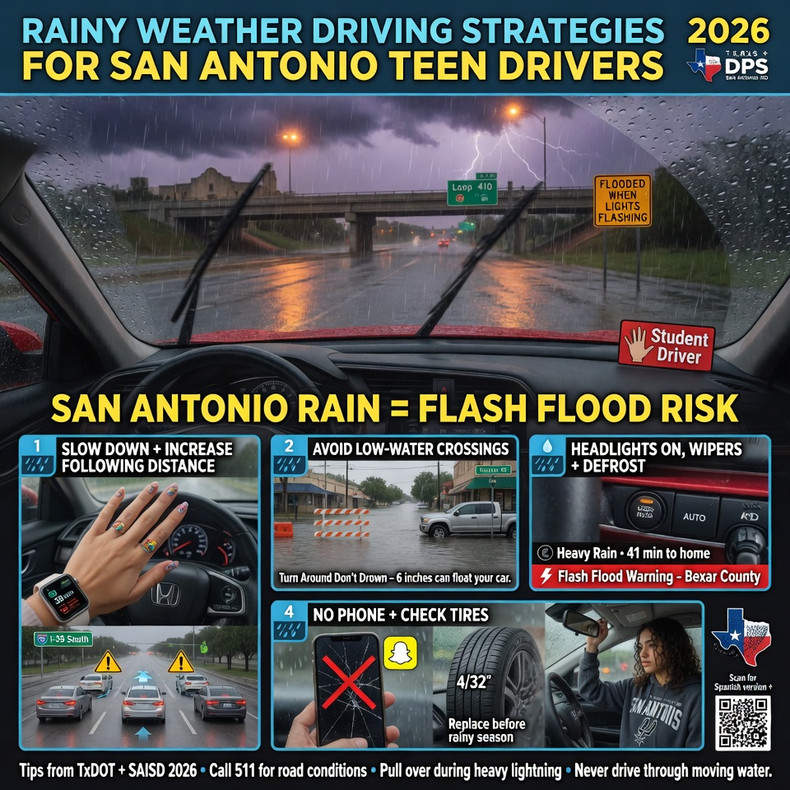
Rainy weather driving can turn familiar San Antonio roads into dangerous challenges for new drivers. According to the latest TxDOT data, weather-related crashes account for approximately 11% of all traffic accidents in Texas — and rain is responsible for more than 85% of those incidents. Precipitation increases crash risk by up to 38%, with the first 30 minutes of rainfall being the most hazardous due to oil and water mixing on the pavement. In San Antonio, afternoon thunderstorms and flash-flooding events on I-35 and Loop 410 make these statistics hit especially close to home for teen drivers.
At Rhodes Driving Schools, our Texas DPS-approved instructors have been teaching rainy weather driving strategies to San Antonio new drivers for over 30 years. We go beyond textbook advice and provide hands-on experience in real Texas rain so teens develop the confidence and skills needed to stay safe. Whether you’re a parent preparing your teen for the road or a new driver building wet-weather habits, these proven Texas rain driving safety tips will help you reduce hydroplaning risk and navigate San Antonio storms with calm control.
Why Rainy Weather Is Especially Dangerous for San Antonio New Drivers
Texas rain often arrives suddenly and heavily, reducing visibility, decreasing tire traction, and creating hydroplaning conditions. New drivers are at higher risk because they haven’t yet developed the muscle memory to react smoothly. On busy corridors like I-35 and Loop 410, where traffic moves fast and low-water crossings are common, these conditions can quickly escalate. Rhodes instructors emphasize that defensive driving in the rain is a skill that saves lives — and one best learned through professional behind-the-wheel practice.
1. Prepare Your Vehicle for Wet Weather Before the Rain Starts
Prevention begins with maintenance:
- Check tire tread depth (minimum 4/32 inch for wet roads) and ensure tires are properly inflated.
- Test windshield wipers and replace them if streaky.
- Verify all lights (headlights, taillights, brake lights) are working.
- Keep an emergency kit with a rain poncho, flashlight, and reflective triangles in the trunk.
These simple rainy weather driving tips San Antonio teens can do at home dramatically improve safety when storms hit.
2. Adjust Your Speed and Following Distance in the Rain
The #1 rule of Texas rain driving safety: slow down. Reduce your speed by at least 10–15 mph in heavy rain and increase your following distance to 4–6 seconds. This gives you extra reaction time if the car ahead brakes suddenly. On I-35 or Loop 410 during rush-hour storms, this extra space can prevent rear-end collisions.
3. Use Proper Headlight Technique and Avoid Glare
Turn on your headlights (not just daytime running lights) as soon as rain starts — even in daylight. This makes your vehicle more visible to others. Avoid high beams in heavy rain, as they create dangerous glare. If oncoming traffic blinds you, look toward the right edge of the road to stay in your lane.
4. Master Hydroplaning Prevention and Recovery
Hydroplaning occurs when water builds up under your tires and you lose contact with the road. To prevent it:
- Drive slower on slick roads.
- Avoid sudden braking or steering.
- Stay out of standing water.
If hydroplaning does happen:
- Stay calm — do not slam the brakes.
- Steer straight and gently ease off the gas until your tires regain traction.
- Never pump the brakes in a modern vehicle with ABS; apply steady, firm pressure if needed.
Rhodes behind-the-wheel lessons include controlled practice in wet conditions so new drivers experience and overcome hydroplaning safely.
5. Handle San Antonio-Specific Rain Hazards
- Avoid low-water crossings during flash floods — “Turn Around, Don’t Drown” is the law for a reason.
- Watch for oil-slicked roads in the first 30 minutes of rain.
- Be extra cautious near construction zones on I-35 and Loop 410 where drainage may be poor.
- Never drive through flooded intersections; even 6 inches of water can float most cars.
These localized Texas rain driving safety strategies are emphasized in every Rhodes lesson tailored to San Antonio roads.
6. Additional New Driver Wet Weather Habits That Save Lives
- Turn off cruise control in the rain.
- Brake and accelerate gently to avoid skids.
- If visibility drops below 500 feet, pull over safely and wait it out.
- Always use your turn signals early so other drivers know your intentions.
Parents: Reinforcing these rainy weather driving strategies at home combined with professional instruction is the fastest way to build lifelong safe habits.
Safer roads start with Rhodes Driving Schools — family-owned, Texas DPS-approved since 1994. Our four convenient San Antonio locations (Helotes, Ellison, Eckhert, and Culebra) offer flexible scheduling so your teen can practice in real rain conditions. Don’t wait for the next storm. Enroll today and give your new driver the wet-weather confidence they need to stay safe year-round on Texas roads.