
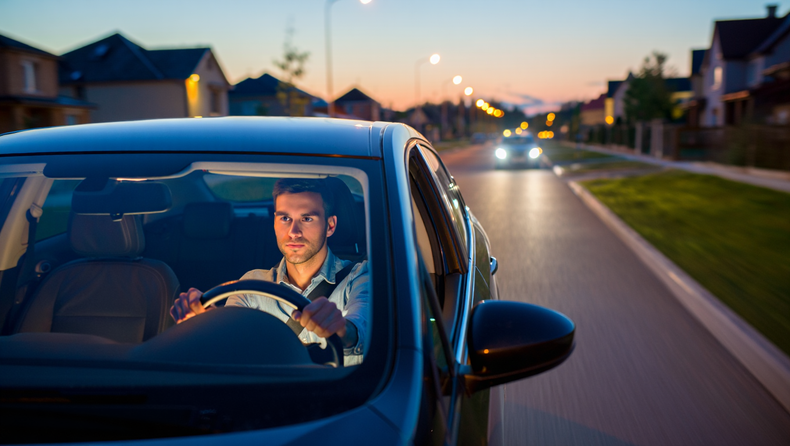
Night driving is the #1 fear reported by new permit holders and their parents — even more than highways or bad weather. Reduced visibility, blinding headlights, and fatigue turn familiar roads into something scary.The good news? Night driving anxiety is 100% conquerable with the right training and mindset. At Rhodes Driving Schools, we’ve helped thousands of nervous beginners become calm, confident night-time drivers. Here’s exactly how we do it — and how you can start tonight.1. Why Night Driving Feels So Hard (It’s Not Just You)
- Depth perception drops by up to 60% after dark
- Peripheral vision narrows dramatically
- Oncoming high beams create temporary “flash blindness”
- Fatigue peaks between 10 p.m. and 2 a.m. — exactly when many teens drive home from work or events
- Look slightly down and to the right (toward the white fog line)
- Count “one-thousand-one, one-thousand-two, one-thousand-three”
- Glance back up
- Low beams: up to 75 m of illumination
- High beams: up to 150 m — use them whenever no oncoming traffic within 150 m
- Auto high-beam systems are great, but learn manual control too
- 20-minute screen break before driving (reduces eye strain)
- Vitamin A-rich foods (sweet potato, spinach) for better low-light sensitivity
- Wear anti-reflective coated glasses if prescribed
- “Deer headlights” scan pattern: sweep left ditch → right ditch → center every 5–8 seconds
- If you see eyes, slow down gradually — never swerve
- Flash high beams quickly to startle animals off the road