
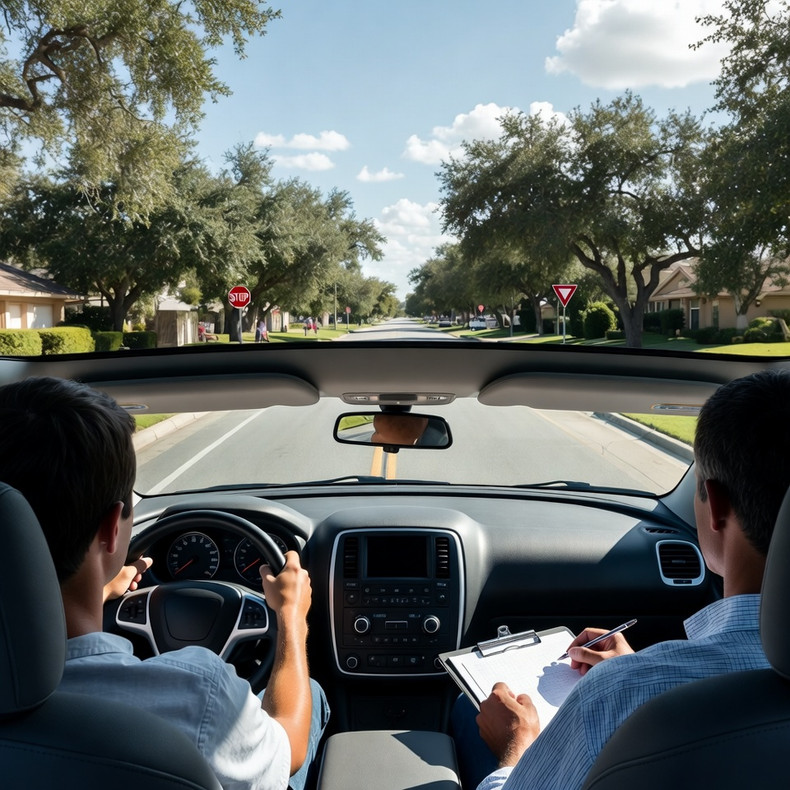
The Texas DPS Road Skills Test can feel intimidating, but most failures stem from a handful of preventable mistakes. In San Antonio, examiners pay close attention to observation skills, vehicle control, and adherence to traffic laws on routes that often include residential streets, intersections, and parking maneuvers near testing locations.
Understanding these top errors — and practicing the right techniques — dramatically increases your chances of passing the first time. Texas DPS allows limited minor deductions, but critical errors like rolling stops or unsafe maneuvers often result in immediate failure.
Top 5 Most Common Road Test Mistakes & Solutions
1. Rolling Stops (Incomplete Stops at Stop Signs) This is one of the most frequent reasons for failure in Texas. Examiners expect a full and complete stop — no inching forward. Solutions:
- Come to a complete stop behind the limit line or crosswalk.
- Count “one-thousand-one, one-thousand-two, one-thousand-three” before proceeding.
- Look left, right, then left again while stopped.
- Practice at multiple stop signs in residential areas near Helotes or Eckhert.
2. Improper Observation – Missing Blind Spots or Mirror Checks Failing to check blind spots before lane changes or turns is a major deduction. Examiners watch for clear head movements. Solutions:
- Use the Mirror – Signal – Shoulder Check sequence every time.
- Exaggerate your head turn slightly so the examiner can see it.
- Check mirrors every 5–8 seconds while driving.
- Practice lane changes in light traffic on familiar routes before test day.
3. Speeding or Driving Too Slowly Both extremes hurt your score. Speeding is often an automatic failure; driving significantly below the limit without reason shows poor vehicle control. Solutions:
- Maintain a steady speed at or slightly below the posted limit.
- Adjust early for school zones, construction areas, and residential streets common in San Antonio.
- Use gentle accelerator and brake inputs for smooth speed control.
- Practice on roads with varying speed limits to build consistent habits.
4. Parallel Parking Errors (Hitting the Curb or Incorrect Positioning) Striking a curb, cone, or failing to position the vehicle correctly is a high-point deduction. Solutions:
- Use the standard reference points: align your rear bumper with the front vehicle’s rear, steer sharply, then straighten.
- Check mirrors and blind spots continuously during the maneuver.
- Practice in actual parking spots with markers or cones until it feels natural.
- Keep movements slow and controlled — rushing increases mistakes.
5. Improper Signaling or Lane Change Mistakes Signaling too late (less than 100 feet before turning) or forgetting to signal entirely is very common. Solutions:
- Signal at least 100 feet (about one city block) in advance.
- Maintain your signal until the maneuver is complete.
- Always combine signaling with full observation.
- Make signals deliberate and early at intersections.
Additional Test-Day Best Practices
- Fasten your seatbelt before starting the engine.
- Keep both hands on the steering wheel (except when signaling or backing).
- Stay calm — controlled, predictable driving impresses examiners more than perfection.
- Drive defensively: anticipate other vehicles and hazards.
Consistent mock tests and focused practice on these areas help most San Antonio students overcome test-day nerves and demonstrate safe, competent driving.
Ready to Ace Your Texas DPS Road Test? Review these mistakes and solutions, then practice deliberately on San Antonio roads.
Drive with confidence, The Rhodes Team Rhodes Driving Schools – San Antonio, TX