
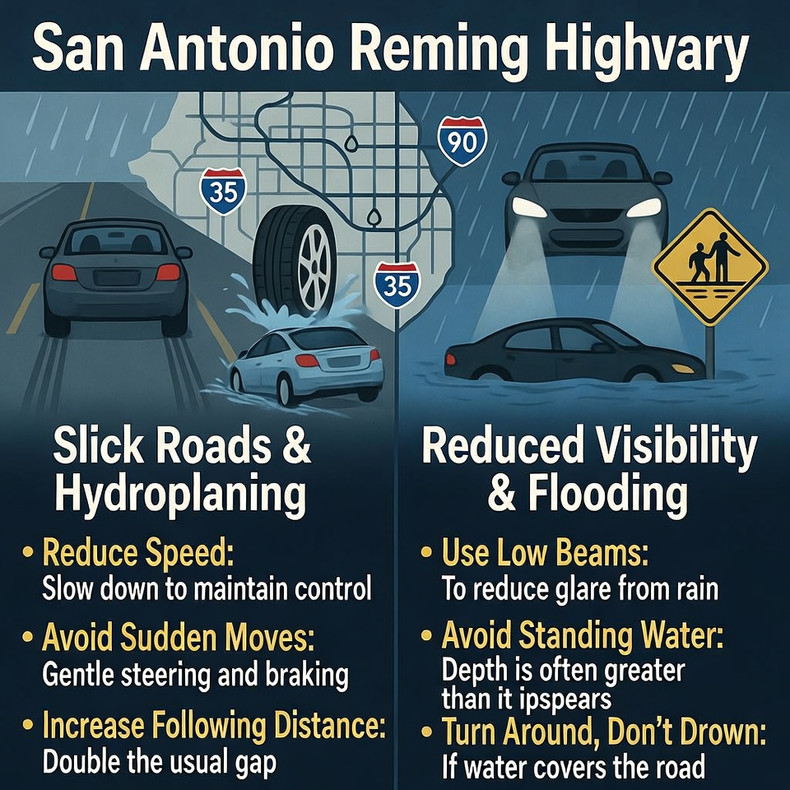
Spring and fall rains hit San Antonio hard, turning familiar roads into slippery hazards for new and teen drivers. Rain accounts for more than 85% of weather-related crashes in Texas, and wet roads nearly double the risk of collisions. The first 10–30 minutes of rainfall are often the most dangerous as oil and debris mix with water, creating an especially slick surface.
In San Antonio, common challenges include hydroplaning on I-35, Loop 410, and US 281, standing water in low-lying areas and underpasses, glare and reduced visibility during heavy downpours, and flash-flood risks near greenbelts, Bandera Road, and Helotes.
These conditions demand extra caution — but with the right preparation and techniques, you can drive safely through rainy weather.
Key Rainy Season Facts & Solutions
1. Vehicle Preparation Before Rainy Season
- Check tire tread depth — replace tires when tread is below 4/32 inch for better wet traction.
- Ensure windshield wipers are in good condition and replace them annually.
- Keep headlights, taillights, and turn signals clean and working.
- Maintain proper tire pressure — underinflated tires increase hydroplaning risk.
2. Driving Techniques on Wet Roads
- Slow Down: Reduce speed by at least 10–15 mph below the posted limit. Hydroplaning can occur at speeds as low as 35 mph.
- Increase Following Distance: Use a 6-second gap (instead of the normal 2–3 seconds) to allow more time to react and stop.
- Avoid Sudden Maneuvers: Do not brake hard, accelerate quickly, or turn sharply — these actions increase the chance of skidding.
- Turn On Headlights: Use low beams even during daytime rain to improve visibility and help other drivers see you (required by Texas law when visibility is reduced).
- Stay in the Center of the Lane: Water pools on the edges and in ruts — driving in the middle reduces hydroplaning risk.
3. Handling Hydroplaning If your tires lose contact with the road (a sudden floating sensation):
- Stay calm — do not slam on the brakes.
- Ease off the accelerator gently and steer in the direction you want to go.
- Once tires regain traction, correct your path smoothly.
- Never use cruise control in wet conditions.
4. Flooding and Standing Water Risks
- Never drive through flooded roads — even 6 inches of moving water can sweep away most passenger vehicles.
- Avoid low-water crossings, dips under bridges, and areas where you cannot see the road surface.
- If water is rising around your car, abandon the vehicle and move to higher ground immediately.
- Turn around — don’t drown is the official Texas safety message.
5. Additional Safety Practices
- Use defroster and wipers to keep windows clear and prevent fogging.
- Avoid driving through large puddles or following large trucks/buses that create heavy spray.
- Plan routes ahead using traffic apps to avoid flooded areas.
- If conditions worsen significantly, pull over safely and wait for the rain to ease.
Consistent practice in light rain with professional instruction helps new drivers gain real confidence and muscle memory for safe wet-weather driving. Dual-control vehicles provide a safe environment to master these skills without unnecessary risk.
Ready to Master Rainy Weather Driving? Start applying these strategies and build stronger habits for San Antonio roads.
Drive safe in all conditions, The Rhodes Team Rhodes Driving Schools – San Antonio, TX