
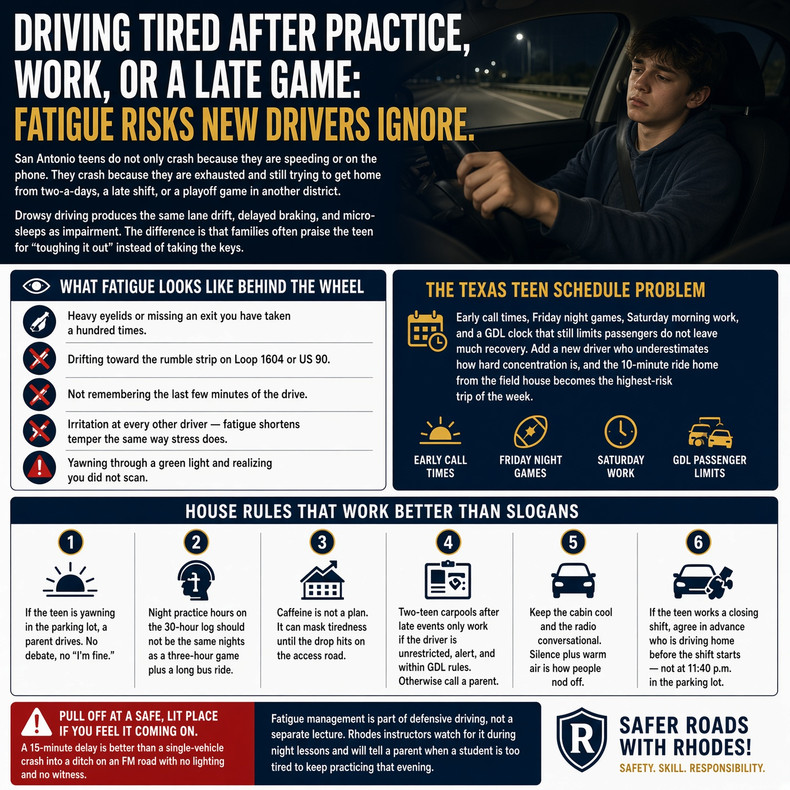
San Antonio teens do not only crash because they are speeding or on a phone. They crash because they are exhausted and still trying to get home from two-a-days, a late shift, or a playoff game in another district.
Drowsy driving produces the same lane drift, delayed braking, and micro-sleeps as impairment. The difference is that families often praise the teen for “toughing it out” instead of taking the keys.
What fatigue looks like behind the wheel
- Heavy eyelids or missing an exit you have taken a hundred times.
- Drifting toward the rumble strip on Loop 1604 or US 90.
- Not remembering the last few minutes of the drive.
- Irritation at every other driver — fatigue shortens temper the same way stress does.
- Yawning through a green light and realizing you did not scan.
The Texas teen schedule problem
Early call times, Friday night games, Saturday morning work, and a GDL clock that still limits passengers do not leave much recovery. Add a new driver who underestimates how hard concentration is, and the 10-minute ride home from the field house becomes the highest-risk trip of the week.
House rules that work better than slogans
- If the teen is yawning in the parking lot, a parent drives. No debate, no “I’m fine.”
- Night practice hours on the 30-hour log should not be the same nights as a three-hour game plus a long bus ride.
- Caffeine is not a plan. It can mask tiredness until the drop hits on the access road.
- Two-teen carpools after late events only work if the driver is unrestricted, alert, and within GDL rules. Otherwise call a parent.
- Keep the cabin cool and the radio conversational. Silence plus warm air is how people nod off.
- If the teen works a closing shift, agree in advance who is driving home before the shift starts — not at 11:40 p.m. in the parking lot.
Pull off at a safe, lit place if you feel it coming on. A 15-minute delay is better than a single-vehicle crash into a ditch on an FM road with no lighting and no witness.
Fatigue management is part of defensive driving, not a separate lecture. Rhodes instructors watch for it during night lessons and will tell a parent when a student is too tired to keep practicing that evening.
Safer Roads with Rhodes!