
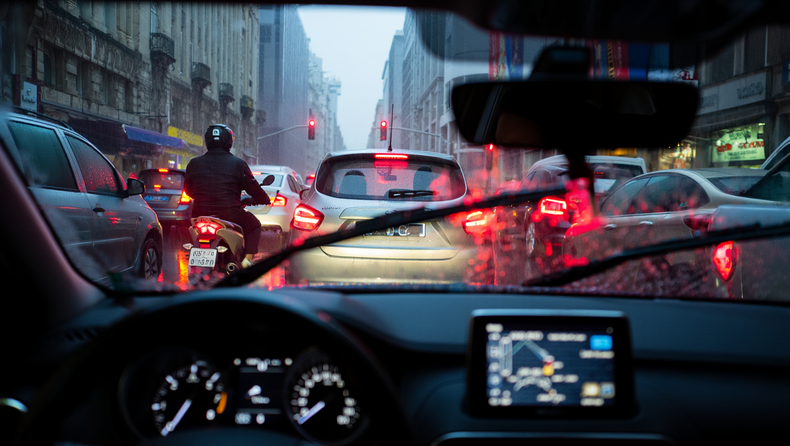
City driving isn’t about speed — it’s about survival. Pedestrians stepping off curbs, delivery trucks double-parked, cyclists weaving through traffic, and rideshare drivers slamming brakes for passengers… urban roads throw dozens of hazards at you every minute.The difference between a close call and a collision? Defensive driving. At Rhodes Driving Schools, we teach every student to think three moves ahead. Here’s the exact system our instructors use to keep you safe in the chaos of city streets.1. The 12-Second Scan RuleProfessional drivers constantly scan 12–15 seconds ahead. That’s the distance you’ll cover in 12 seconds at current speed.Practice this pattern every 5–8 seconds:
- Far ahead (12–15 sec) → mirrors → near left → near right → dashboard → repeat
- What if that pedestrian checks their phone and steps out?
- What if the parked car door opens right now?
- What if the cyclist runs the red light?
- Dooring (car doors opening) – leave 1 metre when passing parked cars
- Jaywalking hotspots – slow 20% near crosswalks even on green
- Delivery vans – expect sudden stops or U-turns
- Bus re-entry – buses always win; give them space
- Construction zones – workers + equipment + distracted drivers = triple threat
- Read: Check all four directions twice
- Ready: Cover the brake before entering
- React: Assume someone will run the light
- Recover: Know your escape path (left shoulder, right curb, etc.)
- Position yourself where you’re least expected to be hit
- In the left lane? Stay on the right side of the lane (away from oncoming left-turners)
- Right lane? Hug the left side (protects from dooring and peds)