
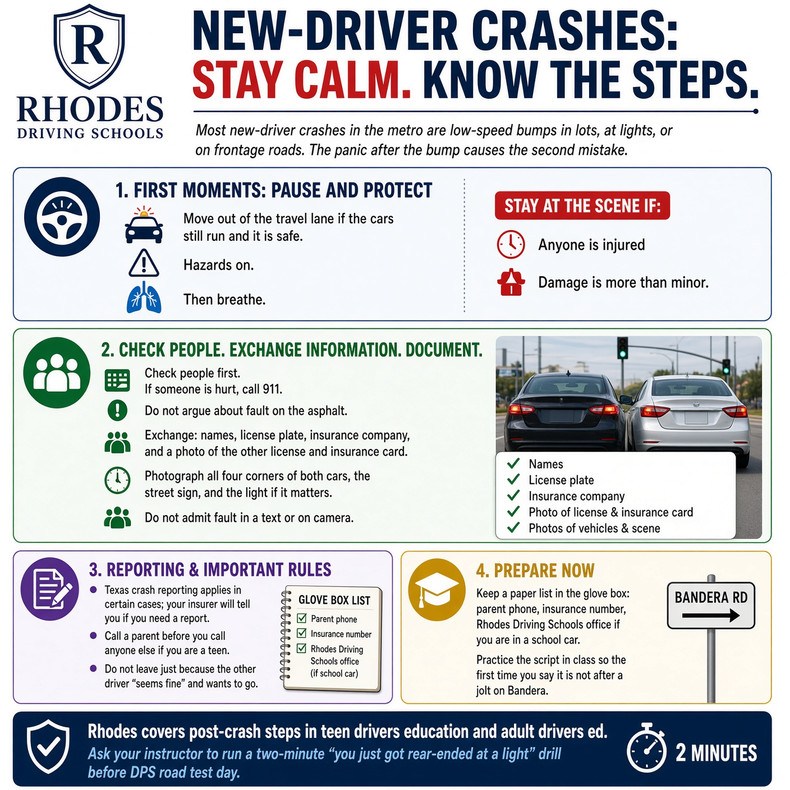
Most new-driver crashes in the metro are low-speed bumps in lots, at lights, or on frontage roads. The panic after the bump causes the second mistake.
Stay at the scene if anyone is injured or if damage is more than minor. Move out of the travel lane if the cars still run and it is safe. Hazards on. Then breathe.
Check people first. If someone is hurt, call 911. Do not argue about fault on the asphalt. Exchange names, license plate, insurance company, and a photo of the other license and insurance card. Photograph all four corners of both cars, the street sign, and the light if it matters. Do not admit fault in a text or on camera.
Texas crash reporting applies in certain cases; your insurer will tell you if you need a report. Call a parent before you call anyone else if you are a teen. Do not leave just because the other driver “seems fine” and wants to go.
Keep a paper list in the glove box: parent phone, insurance number, Rhodes Driving Schools office if you are in a school car. Practice the script in class so the first time you say it is not after a jolt on Bandera.
Rhodes covers post-crash steps in teen drivers education and adult drivers ed. Ask your instructor to run a two-minute “you just got rear-ended at a light” drill before DPS road test day.