
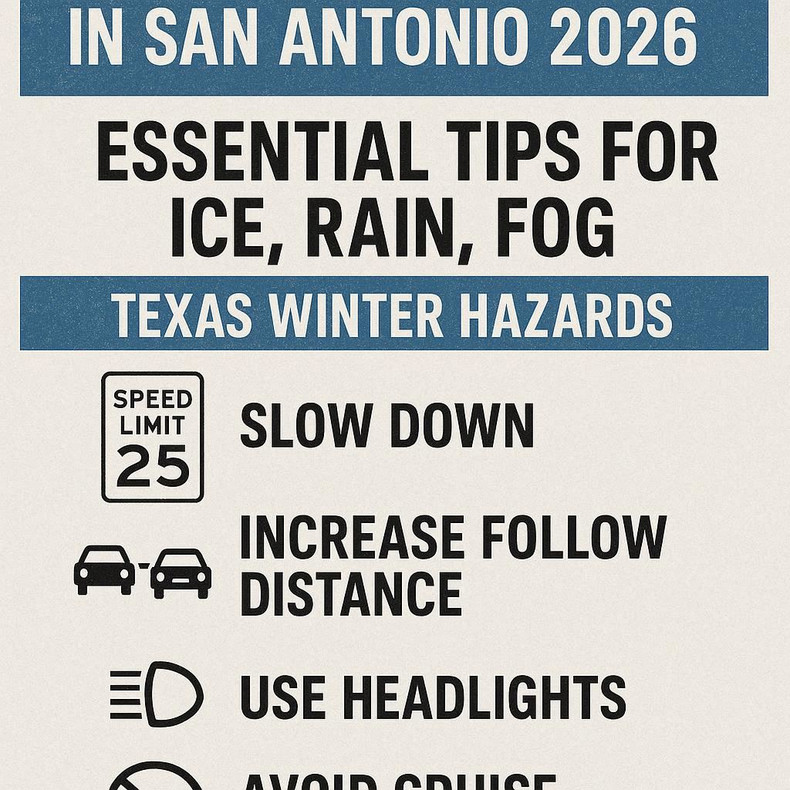
San Antonio's winters are usually mild, but as seen in early 2026 arctic blasts bringing freezing rain, patchy ice, and dense fog, conditions can turn dangerous fast—especially on bridges, overpasses, and shaded roads. The Texas Department of Public Safety (DPS) and TxDOT urge drivers to stay home if possible during ice storms, but if you must drive, preparation saves lives. At Rhodes Driving Schools, our defensive driving courses teach these skills hands-on, helping San Antonio drivers avoid skids, hydroplaning, and crashes in adverse weather.Why Winter Driving in Texas Is Riskier Than You Think in 2026Texas roads aren't built for frequent snow/ice, so even light freezing rain creates black ice—nearly invisible and deadly on I-10, I-35, Loop 410, and elevated structures. Recent 2026 events in San Antonio showed ice accumulating first on bridges/overpasses, causing spinouts and multi-vehicle incidents. Fog reduces visibility to under 500 feet, rain causes hydroplaning, and sudden cold snaps catch drivers off guard.DPS and TxDOT stress: Check conditions via DriveTexas.org or 800-452-9292 before heading out. If travel is unavoidable, drive slowly and cautiously.Vehicle Preparation Checklist for Winter Safety in San AntonioBefore cold fronts hit:
- Tires: Ensure at least 2/32-inch tread depth; check pressure monthly (typically 32–35 PSI—adjust for cold weather drops). Rotate every 6,000 miles.
- Brakes & Fluids: Inspect brakes; top off antifreeze, windshield washer fluid (winter mix), and oil.
- Wipers & Lights: Replace worn blades; test headlights, taillights, hazards, and defroster.
- Battery & Heater: Test battery (cold weakens it); ensure heater/defroster work.
- Emergency Kit: Pack blankets, water, snacks, phone charger, ice scraper, flashlight, jumper cables, and first-aid supplies.
- Stay home if possible — Especially during freezing rain or ice warnings.
- Slow down dramatically — Reduce speed well below posted limits (e.g., 45 mph or less on highways).
- Increase following distance — Triple it (at least 6–8+ seconds) for extra stopping room.
- Extra caution on bridges/overpasses — These freeze first; approach slowly and avoid sudden moves.
- No cruise control — It can cause loss of control on slick surfaces.
- If skidding — Ease off gas/brakes gently; steer in the direction you want to go (don't slam brakes).
- Clear your vehicle — Remove all ice/snow from windows, mirrors, and lights before driving.
- Reduce speed in rain—especially first 30 minutes when oils rise.
- Maintain 4–6 second following distance.
- If hydroplaning: Ease off accelerator (don't brake hard); steer straight until traction returns.
- Use headlights (not just daytime running lights) for visibility.
- Slow to 20–30 mph or less if visibility drops.
- Use low-beam headlights (high beams reflect back).
- Increase following distance significantly.
- Pull over safely if visibility <500 feet—turn on hazards.
- Avoid stopping on roadway—find shoulder or exit.
- Simulator training for skids, hydroplaning, and low-visibility scenarios.
- Real-world tips for San Antonio's unique risks (e.g., I-35 merges in rain).
- Updates on 2026 laws like move-over for emergency vehicles in bad weather.