
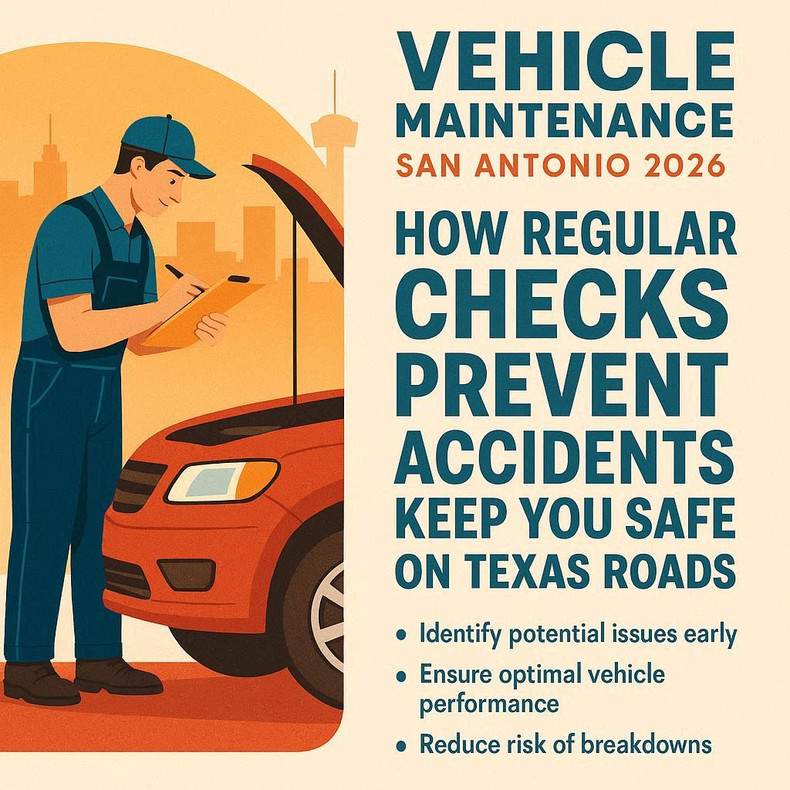
In San Antonio's hot summers, heavy traffic on I-10 and I-35, and occasional winter freezes, a well-maintained vehicle is your best defense against breakdowns and crashes. While Texas eliminated non-commercial vehicle safety inspections on January 1, 2025 (replaced by a $7.50 fee at registration), neglecting maintenance still causes issues like tire blowouts, brake failures, or hydroplaning—contributing to preventable accidents. DPS and TxDOT stress that routine checks save lives, reduce repair costs, and improve safety.At Rhodes Driving Schools, our defensive driving and behind-the-wheel lessons include basic vehicle inspection training so students spot problems early. Here's your 2026 guide to vehicle maintenance preventing accidents in San Antonio.Why Vehicle Maintenance Matters for Accident Prevention in 2026Poorly maintained cars lead to failures that cause or worsen crashes:
This focuses on pollutants (not safety like old inspections), but a failing test often signals maintenance needs (e.g., bad catalytic converter). Get it done 90 days before renewal to avoid delays. Prepare your car—routine checks help pass easily.San Antonio-Specific Tips for Hot Weather & Busy Roads
- Worn tires cause skids (especially in rain or heat).
- Faulty brakes delay stopping—critical on busy San Antonio freeways.
- Low fluids overheat engines or cause breakdowns in traffic.
- Dim lights reduce visibility, increasing collision risk at night or in fog.
- Tires: The Foundation of Safe Driving
Check pressure monthly (use door-jamb sticker for PSI—typically 32–35; drops in cold). Inspect tread (use penny test: Lincoln's head hidden = good; visible = replace). Rotate every 6,000 miles.
Why it prevents accidents: Proper tread/pressure improves grip, reduces blowouts on highways, and cuts hydroplaning risk in Texas rain. - Brakes: Stop Safely Every Time
Listen for squealing/grinding; feel for pulling or soft pedal. Inspect pads/rotors every 12,000 miles or as needed.
Professional check recommended annually.
Why it prevents accidents: Brakes fail in emergencies—good ones shorten stopping distance on I-35 merges or sudden stops. - Lights & Signals: Be Seen & Communicate
Test headlights (low/high), taillights, brake lights, turn signals, hazards monthly. Clean lenses. Replace bulbs promptly.
Why it prevents accidents: Faulty lights cause ~5% of crashes (miscommunication or low visibility). Essential in San Antonio's urban nights. - Fluids: Keep Systems Running Smoothly
Check engine oil (every 1,000–3,000 miles), coolant/antifreeze (vital for Texas heat), brake/transmission/power steering fluid, windshield washer fluid. Top off or change per manual.
Why it prevents accidents: Low fluids lead to overheating, leaks, or failures—causing stalls or loss of control. - Wipers, Battery & Belts/Hoses
Replace wipers if streaking (Texas rain/flood risks). Test battery (cold weakens it; heat drains fast). Inspect belts/hoses for cracks.
Why it prevents accidents: Clear visibility and reliable starts avoid surprises.
This focuses on pollutants (not safety like old inspections), but a failing test often signals maintenance needs (e.g., bad catalytic converter). Get it done 90 days before renewal to avoid delays. Prepare your car—routine checks help pass easily.San Antonio-Specific Tips for Hot Weather & Busy Roads
- Heat stresses tires/batteries—check more often in summer.
- Use AC wisely to avoid overheating.
- Schedule services before peak seasons (e.g., pre-summer checks).
- Carry basics: spare tire, jack, fluids for roadside fixes.
- Pre-drive vehicle walkarounds (tires, lights, fluids).
- Recognizing warning signs (dashboard lights, noises).
- Defensive strategies tied to vehicle condition.