
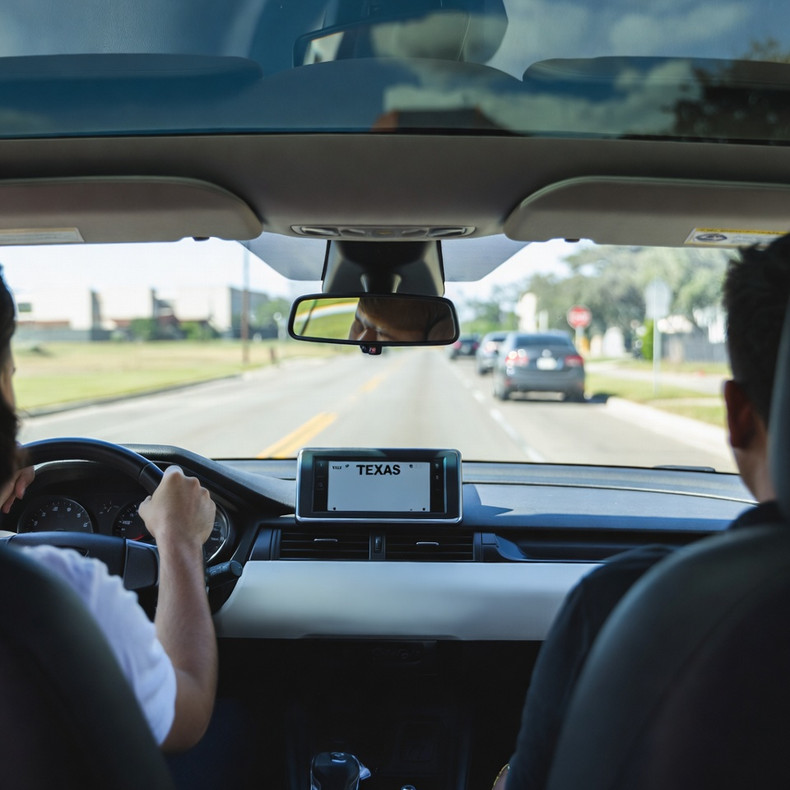
Preparing for your Texas DPS driving test can feel overwhelming, especially in busy San Antonio where traffic on I-35, Loop 410, and US 281 adds extra pressure. Many first-time test takers fail not because they can’t drive, but because of small, preventable mistakes.At Rhodes Driving Schools, our experienced instructors have helped thousands of San Antonio teens and adults pass the DPS road test on the first try. In this guide, we reveal the top 5 most common driving test mistakes in Texas and share practical strategies to avoid them.Master these tips, and you’ll walk into your DPS appointment feeling prepared and confident.1. Rolling Stops (Incomplete Stops at Stop Signs)This is by far one of the most common driving test mistakes in Texas. Examiners expect a full and complete stop — meaning your vehicle must come to a total standstill for at least 2–3 seconds.Why students fail this:
- “California rolling stops” where the car slows but never fully stops
- Nervousness causing them to inch forward too soon
- Forgetting to stop behind the limit line or crosswalk
- Practice the “count to three” rule: Stop completely, count “one-one-thousand, two-one-thousand, three-one-thousand,” then proceed only when safe.
- Always stop behind the stop line, not on it or past it.
- During home practice in San Antonio neighborhoods, treat every stop sign like it’s your driving test.
- Relying only on mirrors without shoulder-checking
- Signaling too late (less than 100 feet before the maneuver)
- Changing lanes without confirming it’s clear
- Develop the habit: Mirror — Signal — Shoulder check — Go.
- Signal at least 100 feet (about one city block) before turning or changing lanes.
- Practice lane changes on quieter San Antonio roads like those near our Helotes or Eckhert locations before tackling busier routes.
- Test-day nerves cause “brake-pedal anxiety” or overly cautious slow driving
- Uncertainty about exact speed limits in school zones or construction areas common in San Antonio
- Maintain a steady speed at or slightly below the posted limit (never over).
- Scan for speed limit signs frequently, especially after turns or on service roads.
- Practice smooth acceleration and braking in our dual-control training vehicles — we help students find that “just right” speed sweet spot.
- Turning the wheel too early or too late
- Not checking mirrors and blind spots during the maneuver
- Ending up too far from the curb or at the wrong angle
- Use the “reference point” method taught in Rhodes lessons (we break it down into simple steps).
- Practice the full sequence: Signal, check traffic, position the car properly, reverse while turning, straighten, and adjust.
- Remember: It’s better to take your time and do it safely than rush and make contact.
- No signal when turning or changing lanes
- Signaling after you’ve already started the maneuver
- Leaving the signal on after completing the turn (forgotten blinker)
- Make signaling the very first step in any maneuver.
- Always cancel the signal manually if it doesn’t auto-cancel.
- During every practice drive, verbally say “signal” out loud to build the habit.
- Seatbelt first: Buckle up before starting the engine — it’s an instant fail if forgotten.
- Smooth steering and braking: Avoid jerky movements or slamming the brakes.
- Follow instructions: Listen carefully to the examiner and don’t argue.
- Stay calm: Take a deep breath if you make a small error — one minor mistake usually won’t fail you if the rest is solid.
- Get professional training: Students who take structured lessons with a school like Rhodes have significantly higher first-time pass rates.
- Personalized one-on-one lessons focused on DPS skills
- Modern dual-control vehicles for safe, stress-free practice
- Mock driving tests that simulate real exam conditions
- Flexible scheduling to fit around school, work, or family
Call us at:
- Helotes: (210) 695-8883
- Ellison: (210) 680-3980
- Eckhert: (210) 523-7483
Safer Roads with Rhodes!