
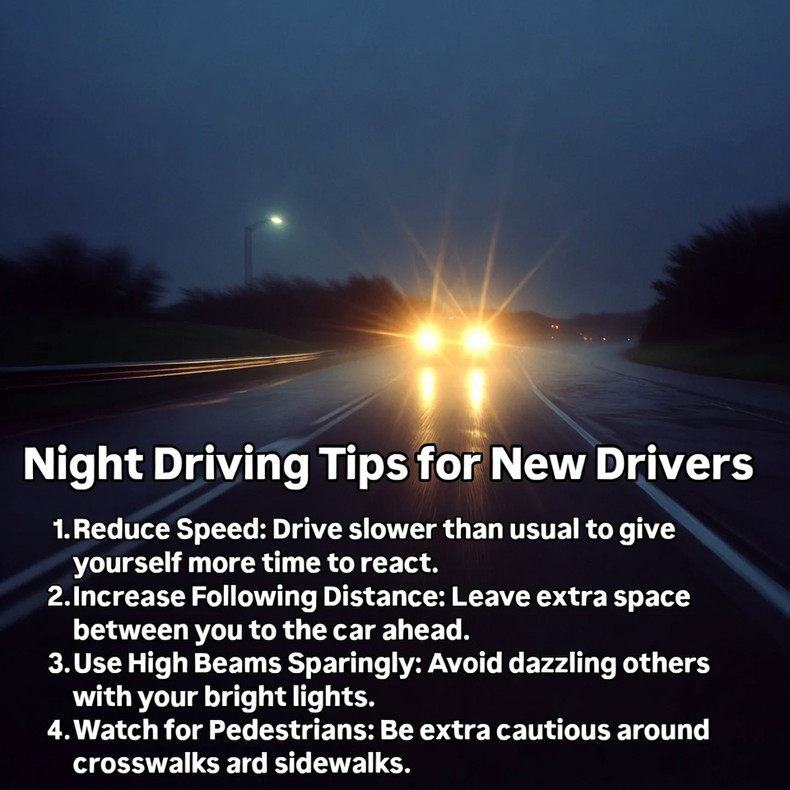
For many new and teen drivers in San Antonio, driving at night can feel intimidating. Reduced visibility, glaring headlights, and unexpected hazards make night driving one of the biggest challenges when earning your Texas driver’s license.Under the Texas Graduated Driver License (GDL) program, provisional license holders face strict nighttime restrictions (usually no driving from midnight to 5 a.m. unless for school or work). Once you’re allowed to drive after dark, having the right skills is essential for safety.If you’re looking for night driving essentials Texas or practical night driving tips for new drivers, this guide from Rhodes Driving Schools will help you build real confidence on San Antonio roads after sunset.1. Why Night Driving Is More Challenging in TexasNight driving reduces your field of vision dramatically — you can only see as far as your headlights reach. In San Antonio and surrounding areas, additional challenges include:
- Bright oncoming headlights on busy highways like I-35, Loop 410, and US 281
- Glare from wet roads after evening thunderstorms
- Wildlife (deer, javelina, or armadillos) crossing rural or suburban roads
- Lower traffic volume but higher speeds from other drivers
- Fatigue after long days of school or work
- Clean everything: Ensure your windshield, headlights, taillights, and mirrors are spotless. Even small smudges amplify glare at night.
- Adjust mirrors properly: Use the night setting on your rearview mirror to reduce glare from vehicles behind you. Position side mirrors to minimize blind spots.
- Use your lights correctly:
- Turn on headlights as soon as it starts getting dark (Texas law requires them from 30 minutes after sunset).
- Avoid high beams in traffic or when following another car.
- Dim your lights promptly for oncoming vehicles.
- Increase following distance: Double your normal gap (aim for 4–6 seconds) because it takes longer to see and react to hazards.
- Scan ahead and to the sides: Don’t fixate on the road directly in front. Look for movement at the edges of your headlights.
- Look slightly to the right edge of the road (white line or shoulder) instead of directly at approaching headlights.
- Reduce speed gradually if glare is severe — never slam on the brakes.
- If blinded, slow down and pull over safely when possible until your vision clears.
- Keep your own interior lights off and dashboard brightness low to preserve night vision.
- Slow down in areas known for deer or other wildlife — especially during dawn and dusk transitions.
- If an animal appears, brake firmly but avoid swerving sharply (swerving often causes worse accidents).
- Use your high beams on dark, unlit rural roads when no other cars are around, but switch back to low beams immediately when you see oncoming traffic.
- Stay extra alert near greenbelts, parks, and undeveloped land around San Antonio.
- Start with short, supervised drives in well-lit residential neighborhoods.
- Progress to moderately lit main roads during early evening hours.
- Practice with a Rhodes instructor or a licensed adult (21+) in the passenger seat.
- Focus on one skill per session: e.g., one night for smooth turns, another for highway merging in low light.
- Gradually extend drive time as your comfort grows — never push too far too fast.
- Fatigue management: Night driving increases drowsiness. If you feel tired, pull over, get fresh air, or switch drivers. Never push through exhaustion.
- Avoid distractions: Keep music low, phone completely away (Texas hands-free laws apply), and limit passengers during early night drives.
- Emergency readiness: Keep a flashlight, extra phone charger, water, and a basic roadside kit in your car.
- Weather awareness: Evening thunderstorms are common in San Antonio. If rain starts, slow down immediately and increase caution.
- Helotes: (210) 695-8883
- Ellison: (210) 680-3980
- Eckhert: (210) 523-7483