
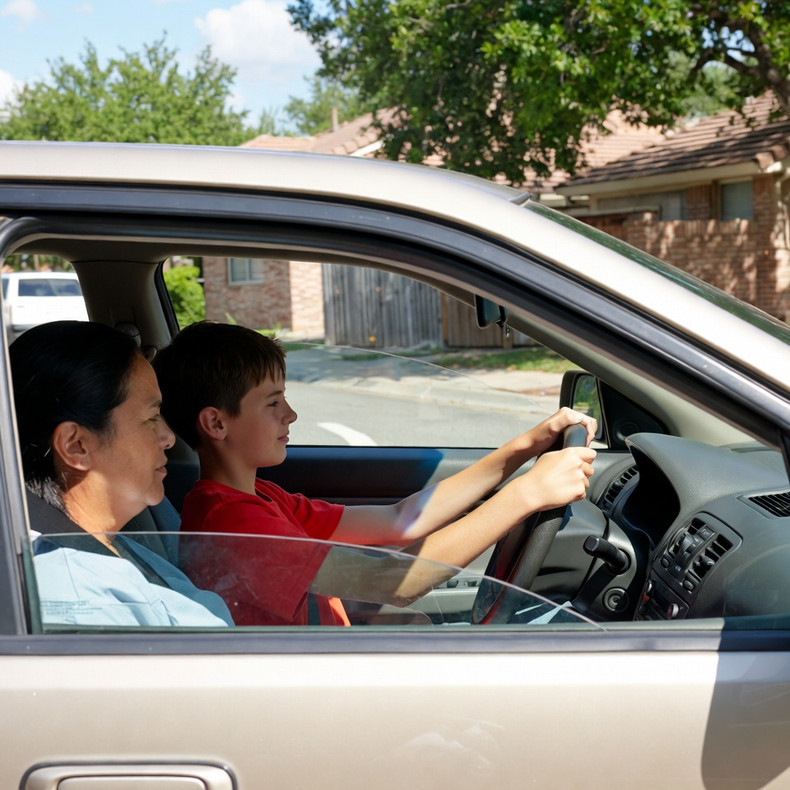
Watching your teenager get behind the wheel for the first time is exciting — and a little nerve-wracking. As a parent in San Antonio, you play one of the most important roles in helping your teen become a safe, confident driver. The Texas Graduated Driver License (GDL) program requires significant supervised practice hours, and how you support them at home can make a huge difference in their progress and safety.If you’re searching for how parents can support teen learner driver efforts, this guide from Rhodes Driving Schools offers practical, low-stress strategies that busy San Antonio families can actually use.1. Create a Positive and Low-Stress Learning EnvironmentTeens learn best when they don’t feel judged or rushed. Your attitude during practice sessions sets the tone.Helpful approaches:
- Stay calm and patient — even when mistakes happen (they will).
- Use encouraging language: “Great job signaling early” instead of “You almost missed that stop sign.”
- Keep sessions short at first (20–30 minutes) to prevent frustration and fatigue.
- End every practice on a positive note, even if it was challenging.
- Teens with a learner’s permit must have a licensed driver age 21+ in the front passenger seat at all times.
- Minimum supervised driving hours: 30 hours (including at least 10 hours at night).
- Restrictions on passengers, nighttime driving, and phone use remain in place even after getting a provisional license.
- All practice must be properly logged on the Texas DPS Driving Log.
- Start in quiet residential areas (many San Antonio neighborhoods near our Helotes, Ellison, or Eckhert locations work well).
- Gradually progress: empty parking lots → residential streets → moderate traffic → highways like Loop 410 or US 281.
- Schedule practice during daylight first, then add evening sessions once skills improve.
- Choose low-stress times — avoid rush hour on I-35 or school pickup times until your teen is ready.
- Use varied conditions: different weather, light traffic, and eventually busier routes.
- Use the “sandwich method”: positive comment → constructive feedback → another positive.
- Focus on one or two skills per session instead of everything at once.
- Ask questions instead of only correcting: “What did you notice about that intersection?” or “How could we improve that lane change?”
- Let your teen explain what they think they did well or need to work on — this builds self-awareness.
- Scanning ahead and checking mirrors every 5–8 seconds.
- Maintaining a safe following distance (3–4 seconds in good weather, more in rain).
- Anticipating what other drivers might do — especially at busy San Antonio intersections.
- Managing distractions: phone stays away, music volume low during early practice.
- Handling construction zones and school areas common around San Antonio.
- Your teen seems overly anxious or frustrated during home practice.
- You notice consistent errors in key areas (lane position, signaling, speed control).
- Family schedules make consistent supervised practice difficult.
- You want expert preparation for the DPS driving test.
- Be a good role model — teens copy what they see, not just what they’re told.
- Celebrate small wins: mastering a tricky merge or smooth parallel parking deserves recognition.
- Discuss real risks: distracted driving, speeding, and impairment — using local San Antonio examples when appropriate.
- Stay consistent with rules and consequences around driving privileges.
- Take care of your own stress — parenting a new driver is challenging for everyone.
- Experienced instructors who understand Texas GDL requirements
- Flexible scheduling around school and family life
- Modern training vehicles with dual controls for safety
- Mock DPS road tests and targeted skill-building sessions
Contact us today at:
- Helotes: (210) 695-8883
- Ellison: (210) 680-3980
- Eckhert: (210) 523-7483